The Ultimate Setup Guide for Your Denon Home 350
Introduction
The Denon Home 350 sits near the top of Denon's wireless speaker family as a large-format, high-fidelity all-in-one speaker designed for serious music lovers and multi-room homeowners. This guide walks through what the device offers, practical setup steps, real-world use cases, common pitfalls, and buying considerations. It is written as an editorial resource for readers who care about sound quality, ecosystem compatibility, and sensible placement in everyday environments.
Detailed Product Review & Analysis
Overview
The Denon Home 350 is positioned as a premium, stationary wireless speaker intended for living rooms, family rooms, and other large spaces. It emphasizes full-range performance, deep bass, and the convenience of modern streaming protocols. Rather than a portable Bluetooth gadget, it is intended to be a central part of a home's audio ecosystem — either as a standalone centerpiece or as one node in a multi-room HEOS configuration.
Design and build
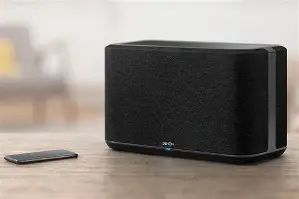
The Home 350 has a substantial, minimalist aesthetic with attention to material quality and finish. Its footprint and weight reflect the larger driver complement and internal amplification required to deliver room-filling sound. Controls are typically limited to essential playback and grouping buttons; the HEOS app or the streaming service app provides the primary control surface. For buyers who care about furniture integration and longevity, the Home 350’s neutral styling and solid chassis make it suitable for extended placement on media cabinets or dedicated shelving.
Sound performance
Where the Denon Home 350 aims to excel is in balanced, detailed playback with emphasis on clarity and low-frequency extension. The speaker reproduces vocals and instruments with good midrange focus while producing more authoritative bass than smaller bookshelf or portable models. Listeners who prioritize accuracy and a fuller low end will find it more satisfying in medium-to-large rooms than compact single-driver speakers. For critical listening, pairing two Home 350 units as a stereo pair (where supported by the ecosystem) provides a wide soundstage and improved imaging compared with a single mono unit.
Connectivity and streaming features
The Home 350 supports the common modern streaming standards that buyers care about: wireless network streaming via Denon’s HEOS platform, AirPlay 2 for Apple devices, Bluetooth for quick local playback, and direct support for popular services through HEOS. It also integrates into multi-room systems so music can be synchronized to multiple rooms or played independently in different zones. For households that already use a Denon or Marantz AV receiver, HEOS integration can simplify unified streaming and room management.
Software, app control, and updates
The HEOS app provides the primary setup path, network configuration, firmware updates, service linking, and equalization options. Denon historically issues firmware and feature updates through HEOS; owners should expect periodic updates that may expand services or refine performance. The availability and user experience of the app are important because many modern wireless speakers rely on a robust mobile interface for full functionality.
Limitations to be aware of
The Home 350 is not designed to be battery-powered or portable. It is a mains-powered, stationary speaker best placed near a power outlet. Owners who require voice assistants built directly into the speaker may need to rely on third-party voice devices or additional integrations, as Denon historically separates speaker hardware from built-in voice services to preserve acoustic performance and privacy choices.
Pros & Cons
- Pros:
- Rich, full-bodied sound suitable for medium-to-large rooms
- Strong low-frequency performance for a single-box speaker
- Flexible streaming: HEOS multi-room, AirPlay 2, Bluetooth, common services
- Solid build quality and understated industrial design
- Good option for both music playback and multi-room systems
- Cons:
- Not portable — mains power only
- Relies on the HEOS app for many setup and advanced features (app experience varies by user)
- May be overkill in small rooms where a compact speaker would suffice
- Does not replace a dedicated AV speaker system for immersive home theater needs
How the Denon Home 350 Compares
Comparisons are useful when buyers must choose between similar premium wireless speakers. The table below highlights the Home 350 relative to smaller siblings in the same family and a commonly referenced competitor.
| Model | Best for | Room size | Connectivity | Ecosystem |
|---|---|---|---|---|
| Denon Home 350 | Primary living-room speaker, multi-room hub | Medium to large | HEOS, AirPlay 2, Bluetooth, Ethernet (where available) | Denon HEOS, works with Denon/Marantz AV gear |
| Denon Home 250 | Smaller rooms or secondary zones | Small to medium | HEOS, AirPlay 2, Bluetooth | Denon HEOS |
| Sonos Five (as reference) | High-fidelity single-box for music lovers | Small to medium | Wi‑Fi, line-in, Sonos app, AirPlay 2 (select models) | Sonos ecosystem |
Step-by-Step Setup Guide
Unboxing and physical placement
Setup begins with careful placement. The Home 350 is at its best when given room to breathe. Owners should place the speaker on a stable surface at least a few inches from walls to allow the cabinet's bass response to develop. For optimal stereo imaging when using a single unit as the main source, place it near the center of the listening area but avoid completely blocking the front with décor or media equipment. Two speakers set up in a stereo pair should form an equilateral triangle with the primary listening position when space and budget permit.
Shop the latest Audio & Headphones picks on Amazon.
See Deals →Power and initial boot
Because the Home 350 is mains-powered, confirm access to a nearby outlet. After powering on, the speaker typically announces readiness for setup (sometimes via an LED indicator or brief tone). Users should wait for any initial boot process to complete before attempting network configuration.
Network configuration using HEOS
Denon’s HEOS app is the central setup tool. Users should:
- Install the HEOS app on a compatible mobile device (iOS or Android).
- Open the app and follow its on-screen prompts to add a new speaker to the network. This usually involves creating or signing into a HEOS/Denon account and letting the app detect the speaker on the local Wi‑Fi network.
- If prompted, connect the phone temporarily to the speaker’s setup network for configuration. Once the speaker joins the household Wi‑Fi, return the phone to the normal Wi‑Fi network.
- Link streaming services inside the HEOS app (Spotify, TIDAL, Deezer, etc.) for direct access without re-authenticating in third-party apps each time.
Firmware updates and EQ
After network setup, the HEOS app commonly checks for firmware updates. Users should allow any available firmware to install. The app also provides EQ controls for bass, treble, and sometimes centre frequencies. Owners who prefer a neutral sound may keep EQ flat; those who entertain frequently may boost bass slightly for extra impact. When fine-tuning, make small adjustments and listen to familiar tracks to judge changes.
Pairing over AirPlay 2 and Bluetooth
AirPlay 2 is handy for Apple users who want direct streaming from iPhones, iPads, and Macs without opening the HEOS interface. The speaker will appear as an AirPlay endpoint in the system audio menu. For Bluetooth pairing, the HEOS app usually provides a simple pairing flow or a dedicated Bluetooth button. Note that Bluetooth typically offers lower network flexibility and does not participate in multi-room synchronized playback the way HEOS or AirPlay 2 do.
Setting up multi-room and stereo pairing
HEOS supports grouping multiple speakers for synchronized multi-room playback. Inside the app, users can create groups, assign room names, and manage playback sources for each zone. When two Home 350 units are present, the app may support configuring them as a stereo pair, which improves imaging and channel separation. Stereo pairing requires both units to be in the same HEOS account and reachable on the same network.
Integrating with existing AV gear
Homes with Denon or Marantz AV receivers often benefit from unified control. When the receiver supports HEOS, the Home 350 can be part of a broader multi-room and home-theatre scheme. Owners should consult the receiver manual for exact steps — integration typically requires the receiver and speaker to be on the same LAN and signed into the same HEOS account.
Real-World Use Cases
People who buy a Denon Home 350 commonly fall into a few categories:
- Primary music system for living rooms: Households that want quality playback without building a full stereo separates system use the Home 350 as a main speaker for everyday listening and social gatherings.
- Multi-room hub: The device serves as a higher-end node in a multi-room HEOS deployment; owners pair smaller speakers in kitchens and bedrooms for whole-home playback.
- Secondary TV audio: In setups without a soundbar, the Home 350 can improve TV sound when connected via compatible network or receiver integrations, though dedicated home-theater speakers remain preferable for surround content.
- Desktop or studio reference (select users): For creators who need fuller sound at a desk, the Home 350 offers rich tonal balance, although studio monitors will still be preferred for production work.
Troubleshooting and Tips
Common connectivity issues
If the HEOS app cannot discover the speaker, typical causes include network isolation (guest networks), router firewall settings, or poor Wi‑Fi signal. Owners should ensure the mobile device and speaker are on the same network and temporarily disable AP isolation features. Moving the speaker closer to the router during initial setup often resolves connection problems.
Audio dropouts and synchronization
Audio dropouts can be caused by congested Wi‑Fi channels or weak signal strength. Switching the router to a less congested channel, using the 5 GHz band for lower interference (if supported), or connecting the speaker via Ethernet (if a wired option is available) improves stability. For multi-room sync issues, confirm all affected speakers are on the same firmware version and network segment.
Looking for the best Audio & Headphones deals on Amazon?
View Offers →If bass is boomy or muddy
Placing the speaker too close to a corner or a wall can exaggerate bass. Moving the speaker a few inches away from walls or using furniture to break standing waves often tightens low-frequency response. The app EQ can provide incremental corrections, but physical placement has the most meaningful impact.
Buying Guide: Is the Denon Home 350 the Right Choice?
Room size and listening habits
The Home 350 is best suited to medium and large rooms where its larger drivers and cabinet volume can deliver satisfying dynamics and bass. For small bedrooms or desks, buyers should consider smaller models in the same family or other compact speakers to avoid overwhelming the space.
Ecosystem considerations
Buyers already invested in Denon/Marantz or HEOS-compatible devices will benefit from a more integrated experience. Those committed to other ecosystems (for example, Sonos) should weigh the value of a single speaker against the convenience of a single, consolidated ecosystem.
Multi-room and future expansion
Users planning to expand to multi-room audio should prefer devices that match on network and software so group management is seamless. The HEOS ecosystem supports a range of Denon products; adding smaller speakers later creates a flexible, scalable system.
Voice assistants and smart home
If built-in voice control is a requirement, buyers should confirm whether the chosen configuration offers direct voice assistant support or whether separate smart speakers will be needed. Many owners pair the Home 350 with dedicated smart devices to combine high-quality audio with voice control convenience.
Budget and alternatives
The Home 350 targets buyers who prioritize sound quality and multi-room flexibility over portability. Those on tighter budgets or needing battery-powered portability should consider other categories of speakers. Conversely, audiophiles who prefer separates may opt for bookshelf speakers and an integrated amplifier for ultimate flexibility.
Conclusion
The Denon Home 350 is an attractive option for listeners who want a single-box, high-performance wireless speaker that can anchor a multi-room system. It offers robust low-end performance, reliable streaming options, and the flexibility of HEOS for multi-zone setups. Buyers who value a blend of sonic authority and system integration — and who have a medium-to-large listening space — will find the Home 350 a compelling choice. Proper placement, firmware maintenance, and attention to network configuration unlock the speaker’s best performance. With sensible expectations about portability and smart-assistant integration, the Home 350 delivers an enjoyable, high-quality listening experience suitable for everyday music and social gatherings.