The Ultimate Showdown: Honeywell Home X2S Smart Thermostat vs Kyy X90E Portable Monitor for 2026
Introduction
As smart home devices and mobile productivity tools become more central to daily life, buyers in 2026 face an expanding field of choices. Two products that represent distinct corners of that landscape are the Honeywell Home X2S Smart Thermostat and the Kyy X90E Portable Monitor. One targets long-term comfort, energy management, and deep home integration; the other is designed for on-the-go screen real estate that caters to remote work, content creation, and travel. This article compares both devices across design, features, real-world use cases, and purchase criteria to help readers decide which device (or combination of devices) best fits their needs.
Context: Why these categories matter in 2026
By 2026, homeowners and renters alike prioritize two overlapping priorities: better control over the home environment (for energy savings, comfort, and health) and flexible productivity tools that adapt to hybrid work patterns. Smart thermostats are evaluated not only on temperature control but on integration with solar, heat pumps, multi-zone HVAC systems, and whole-home sensors. Portable monitors are judged on portability, connection standards (USB-C, Thunderbolt, wireless casting), color accuracy, and cross-device compatibility. The Honeywell Home X2S and Kyy X90E represent the latest thinking in their categories: one seeks to centralize climate control and data-driven efficiency, the other to expand display options beyond the laptop.
Product Analysis: Honeywell Home X2S Smart Thermostat
Design and build
The Honeywell Home X2S takes a modern, minimal approach to thermostat design: a slim profile, a clear touchscreen, and an interface focused on ease of use. The physical footprint is modest, which suits apartments and compact wall spaces. Materials and finish choices aim to blend with contemporary interiors while keeping the UI legible from across a room.
Key features and smart home integration
The X2S emphasizes smart scheduling, multi-sensor support, and third-party voice assistant compatibility. In practice, buyers can expect:
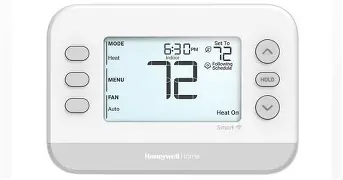
- Adaptive scheduling: learns occupancy patterns and adjusts setpoints to balance comfort with efficiency.
- Multi-sensor support: works with remote temperature/humidity/motion sensors to reduce hot and cold spots in multi-room homes.
- Home automation compatibility: integrates with popular smart platforms to allow routines (e.g., "Away" mode raises the setpoint and arms security sensors).
- Energy reporting: provides usage summaries and suggestions to reduce HVAC runtime.
- Advanced HVAC support: designed to work with modern HVAC configurations including heat pumps and multi-stage systems.
Installation and setup
Installation targets both DIY-savvy homeowners and professional installers. The thermostat typically requires a common (C) wire or a power adapter for stable operation. App-guided setup walks through wiring validation and system detection, while compatibility checks help avoid installation mismatches. For complex systems (multi-zone, commercial boilers), professional installation remains advisable.
Performance and real-world use
In daily life, the X2S aims to reduce manual thermostat adjustments. For a family with shifting occupancy patterns, the thermostat’s adaptive schedule and room sensors reduce complaints about uneven temperatures. For homeowners with energy targets, the device surfaces actionable data��like runtime by mode or schedule suggestions tied to outdoor weather. Integration with voice assistants and geofencing ensures the home is comfortable on arrival and more efficient when empty.
Software updates and privacy
Long-term value depends on firmware and app support. A regular cadence of updates that add features, tighten security, and expand integrations is crucial. Privacy-conscious buyers should look for transparent data-use policies and robust local control options that allow basic scheduling without cloud dependency.
Product Analysis: Kyy X90E Portable Monitor
Design and build
The Kyy X90E is positioned as a portable display for users who need a compact, lightweight second screen. The chassis is typically thin and light, with a protective folio-style cover that doubles as a stand. The monitor prioritizes a balance of durability and portability for commuters and digital nomads.
Looking for the best Electronics deals on Amazon?
Shop Amazon →Display and performance
Portable monitors are judged on panel quality, refresh rate, and connectivity. The X90E focuses on:
- IPS/VA panel: for wide viewing angles and consistent colors across the surface.
- Resolution and pixel density: sufficient for document editing, spreadsheets, and streaming content at typical laptop distances.
- Refresh rate and latency: adequate for general productivity and casual media consumption; higher-refresh versions are better for fast-paced gaming.
- Port selection: USB-C with DisplayPort Alt Mode for single-cable video and power, plus HDMI input for legacy devices and a headphone jack for audio output.
Connectivity and compatibility
One of the X90E’s strengths is its compatibility with laptops, phones, and some tablets via USB-C. In practical use, an all-in-one USB-C connection allows a laptop to power the panel and transmit display data simultaneously, minimizing cable clutter. For devices without USB-C video, HDMI remains a fallback. Wireless casting features, when included, are convenient for quick presentations but typically involve higher latency.
Real-world use cases
Typical buyers include remote workers who want a portable second screen for productivity, photographers who want an extra preview screen in the field, and students who need additional workspace without a bulky desktop monitor. For travel, the X90E’s light weight and case-protected glass make it convenient for hotel workspaces and airport layovers.
Pros & Cons
Honeywell Home X2S Smart Thermostat
- Pros:
- Smart scheduling and multi-sensor support improve comfort and efficiency.
- Integration with mainstream smart home platforms enables automation and voice control.
- Energy reporting can guide cost-saving behavior and reduce HVAC runtime.
- Suitable for a wide range of modern HVAC systems, including heat pumps.
- Cons:
- May require a C-wire or adapter—adds complexity for some installations.
- Full benefit depends on app support and firmware updates.
- Advanced features may be overkill for renters or owners of simple single-stage systems.
Kyy X90E Portable Monitor
- Pros:
- Adds valuable screen real estate for productivity without a full desktop setup.
- Single-cable USB-C workflows reduce clutter and speed setup.
- Lightweight and travel-friendly with a protective case.
- Versatile inputs (USB-C, HDMI) support a wide range of devices.
- Cons:
- Portable panels often trade off peak brightness and color depth compared with desktop monitors.
- Battery-powered use can be limited by power draw if the laptop cannot supply sufficient wattage.
- Wireless casting, if available, tends to introduce latency not suitable for competitive gaming.
Side-by-side comparison
| Category | Honeywell Home X2S Smart Thermostat | Kyy X90E Portable Monitor |
|---|---|---|
| Primary purpose | Climate control, energy management, home automation hub | Portable secondary display for productivity and media |
| Best for | Homeowners seeking energy savings and integrated comfort | Remote workers, travelers, creative professionals |
| Main interface | Touchscreen + mobile app + voice assistants | LCD/IPS panel with physical buttons and companion software |
| Installation | Wall-mounted, wiring required (C-wire recommended) | Plug-and-play; stand or folio case for desk use |
| Connectivity | Wi‑Fi, Zigbee/Z‑Wave or proprietary integrations (varies) | USB‑C (DisplayPort Alt Mode), HDMI, optional wireless casting |
| Mobility | Fixed installation | Highly portable |
| Power | Hardwired to home HVAC power or C‑wire | USB‑powered; may require external power for brighter panels |
| Value drivers | Energy savings, comfort automation, long-term home value | Increased productivity, flexible workspace, portability |
Buying Guide: How to choose between the X2S and the X90E
Choosing between a smart thermostat and a portable monitor is usually not an either/or decision—these devices solve different problems. The right choice depends on the buyer’s priorities. Below are the key criteria to evaluate with practical guidance.
1. Identify the problem to solve
If the goal is to lower energy bills, improve home comfort, or integrate HVAC control into a broader smart home system, a smart thermostat like the X2S is the clear category choice. If the objective is to expand screen space for work, presentations, or entertainment while maintaining portability, the Kyy X90E fits that need.
2. Check compatibility and technical requirements
For thermostats, verify HVAC compatibility (single-stage vs. multi-stage, heat pump support) and whether a C-wire is present. For portable monitors, confirm that the primary devices support USB-C DisplayPort Alt Mode or have HDMI output. Power delivery capability from laptops affects whether a single cable can drive both video and power.

3. Consider installation and ongoing maintenance
Thermostat installation often involves wiring and possibly professional labor. Factor in installation costs and whether the homeowner prefers a clean, permanent solution versus a temporary one for a rental. Portable monitors require minimal setup but depend on firmware and driver support for optimal compatibility.
Discover deals on Electronics — updated daily.
See Deals →4. Evaluate software, updates, and ecosystem
Smart thermostats are most useful when the accompanying app is well-designed and regularly updated; look for transparent privacy policies and over-the-air firmware updates. For monitors, check driver availability, compatibility with display management software, and firmware updates for feature improvements.
5. Real-world testing and reviews
Seek real-user feedback on temperature recovery times, sensor accuracy, and long-term reliability for thermostats. For portable monitors, evaluate color accuracy, brightness in various lighting conditions, and the robustness of the protective case. Hands-on trial or return-friendly retailers make it easier to confirm expectations.
6. Budget and long-term value
Thermostats can pay back through reduced HVAC runtime but often have a higher upfront cost and installation expense. Portable monitors are usually lower cost but offer immediate productivity gains. Consider the total cost of ownership: energy savings, potential rebates for smart thermostats, warranty length, and the cost of replacement accessories for monitors.
7. Specific recommendations by user type
- Homeowners with HVAC complexity: Prioritize the smart thermostat for professional compatibility and system optimization.
- Renters and students: A portable monitor is non-invasive and provides immediate productivity benefits without altering the living space.
- Remote professionals who travel: Choose the portable monitor for lightweight multi-screen setups in transient workspaces.
- Energy-conscious families: A smart thermostat paired with multi-room sensors gives the most measurable gains.
Conclusion
In 2026, the Honeywell Home X2S Smart Thermostat and the Kyy X90E Portable Monitor answer very different but equally modern needs. The X2S is aimed at those who view the home as a long-term investment—prioritizing comfort, energy efficiency, and integration into a broader smart ecosystem. It shines when paired with a multi-sensor setup and when firmware and app support remain active over time. The Kyy X90E is a practical tool for mobility, offering immediate gains in productivity and convenience for users who need extra screen space on the road or in compact workspaces.
Ultimately, the decision should align with the buyer’s daily priorities: environmental comfort and savings (choose the thermostat), or flexible display and portability for work and media (choose the monitor). For many households, the ideal outcome is complementary—optimizing the living environment with a smart thermostat while enabling mobile productivity with a portable monitor. Each device brings measurable benefits in its domain, and thoughtful selection based on compatibility, installation realities, and long-term support will maximize value.